2026 Digital Literacy: Impact on Gen Z Cognitive Development

Advertisements
The 2026 digital literacy standards in US schools are profoundly influencing Gen Z’s cognitive development, fostering advanced critical thinking, media discernment, and responsible digital citizenship essential for their future success and well-being.
The educational landscape is constantly shifting, but few changes hold as much transformative potential as the new digital literacy standards being implemented in US schools by 2026. This isn’t just about teaching kids to use computers; it’s a fundamental reimagining of how Gen Z interacts with information, processes knowledge, and develops cognitively in an increasingly digital world.
Advertisements
The Evolution of Digital Literacy: Beyond Basic Tech Skills
Digital literacy in 2026 extends far beyond the rudimentary ability to operate devices or navigate the internet. It encompasses a holistic suite of skills designed to equip Gen Z with the capacity to thrive in a complex digital ecosystem. This evolution acknowledges that simply having access to technology is insufficient; the true challenge lies in critical engagement and responsible participation.
The new standards emphasize a shift from passive consumption to active, discerning interaction. Students are no longer just learning to find information; they are learning to evaluate its credibility, understand its biases, and synthesize it into new knowledge. This profound change aims to cultivate a generation that is not merely tech-savvy but also intellectually resilient in the face of digital challenges.
From Tool Use to Critical Engagement
The traditional view of digital literacy often focused on practical application, such as word processing or online searching. While these remain important, the 2026 standards elevate the cognitive demands, pushing students to engage with digital content on a deeper, more analytical level.
- Information Vetting: Teaching students to identify reliable sources and distinguish fact from misinformation.
- Algorithmic Awareness: Understanding how algorithms shape the information they encounter online.
- Data Interpretation: Developing the ability to analyze and make sense of digital data sets.
- Digital Footprint Management: Educating on the permanence and implications of their online presence.
This comprehensive approach ensures that Gen Z develops not just technical proficiency, but also the cognitive frameworks necessary to navigate the ethical and intellectual complexities of the digital age. The goal is to cultivate independent thinkers who can critically assess and contribute to the digital world responsibly.
Impact on Cognitive Development: Enhancing Critical Thinking
The integration of advanced digital literacy standards is having a profound effect on Gen Z’s cognitive development, particularly in the realm of critical thinking. In an era of information overload, the ability to discern, evaluate, and synthesize information is paramount. These standards are intentionally designed to sharpen these crucial cognitive skills.
Traditional learning often presented information in a linear fashion, with clear boundaries and authoritative sources. The digital landscape, however, is fluid and often ambiguous. The 2026 standards compel students to confront this ambiguity head-on, fostering a more agile and adaptive cognitive process.
Navigating Information Overload
One of the most significant cognitive benefits of the new digital literacy standards is the development of strategies for managing and making sense of vast amounts of information. Gen Z is growing up in a world where data is ubiquitous, and the ability to filter noise from signal is a vital skill.
Students are being taught systematic approaches to information retrieval and evaluation. This includes understanding search engine logic, identifying sponsored content, and cross-referencing information from multiple sources. These practices directly strengthen executive functions such as selective attention, working memory, and cognitive flexibility.

Moreover, the emphasis on project-based learning within digital contexts encourages students to apply critical thinking to real-world problems. They learn to formulate questions, design research strategies, and present their findings using digital tools, thereby solidifying their analytical and problem-solving capabilities. This shift from rote memorization to active inquiry is a cornerstone of modern cognitive development.
Media Literacy and Source Evaluation: A New Era of Discernment
A cornerstone of the 2026 digital literacy standards is the rigorous focus on media literacy and source evaluation. Gen Z is constantly bombarded with information from diverse, often unchecked, sources. Developing the capacity to critically assess the veracity and intent behind digital content is no longer a niche skill but a fundamental requirement for informed citizenship and sound cognitive development.
Schools are implementing curricula that explicitly teach students how to deconstruct media messages, identify propaganda, and recognize logical fallacies. This goes beyond simply checking facts; it involves understanding the production, distribution, and consumption of media in a digital age, including the role of algorithms and echo chambers.
Combating Misinformation and Disinformation
The proliferation of misinformation and disinformation poses a significant threat to cognitive well-being and societal cohesion. The new standards equip Gen Z with the tools to actively combat these phenomena, fostering a more resilient and discerning mind.
- Lateral Reading: Teaching students to open multiple tabs and verify information by cross-referencing sources.
- Fact-Checking Tools: Introducing students to reputable fact-checking websites and techniques.
- Bias Identification: Helping students recognize ideological, commercial, and personal biases in online content.
- Contextual Understanding: Emphasizing the importance of understanding the historical and social context of information.
By engaging in these practices, students are not only protecting themselves from manipulation but also actively strengthening their analytical reasoning and skepticism, which are crucial components of advanced cognitive function. This proactive approach to media consumption is vital for intellectual autonomy.
Digital Citizenship and Ethical Use: Shaping Responsible Online Behavior
Beyond cognitive skills, the 2026 digital literacy standards place a strong emphasis on digital citizenship and ethical online behavior. This aspect is crucial for Gen Z’s social-emotional development and their ability to interact respectfully and responsibly within digital communities. It addresses the moral and ethical dilemmas inherent in online interactions.
Education now includes explicit instruction on online etiquette, privacy, cyberbullying prevention, and copyright. The goal is to cultivate individuals who understand their rights and responsibilities in the digital realm, fostering a culture of empathy and respect online, mirroring real-world interactions.
Promoting Positive Online Interactions
Creating a positive and safe online environment is essential for the healthy cognitive and social development of young people. The standards encourage active participation in constructive digital communities, while also equipping students to identify and report harmful content or behavior.
Students are learning about the long-term consequences of their online actions, both for themselves and for others. Discussions around digital empathy, the impact of words online, and understanding diverse perspectives are becoming integral parts of the curriculum. This helps Gen Z develop a stronger sense of self-awareness and social responsibility in the digital space.
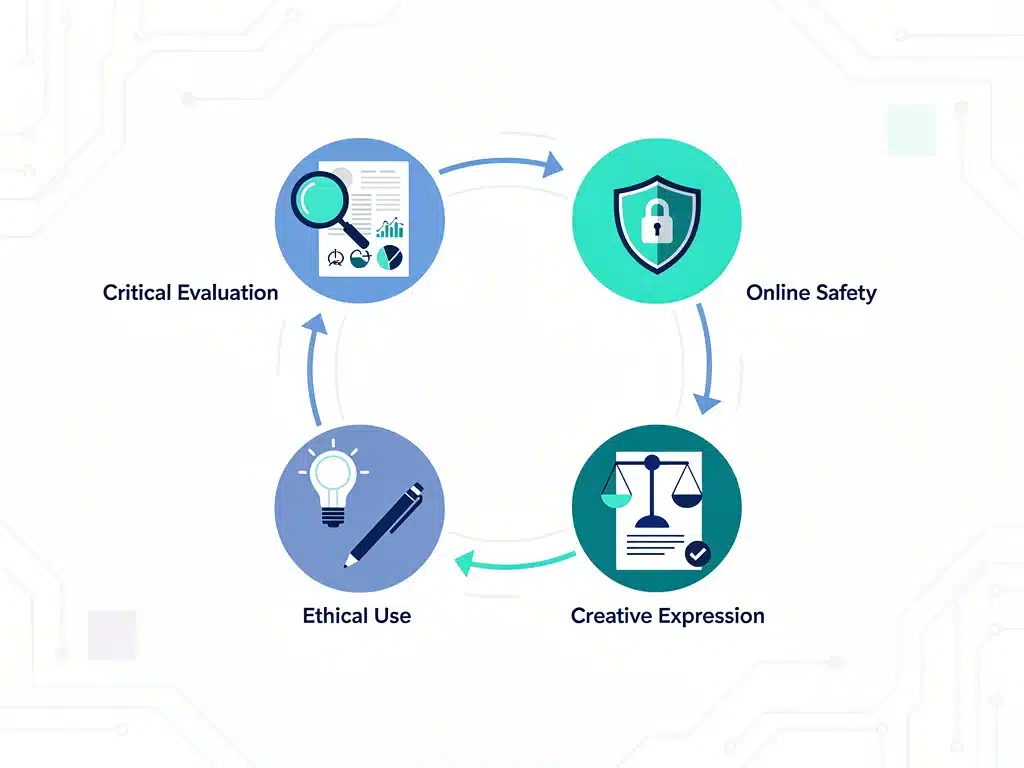
Furthermore, understanding intellectual property rights and the ethical use of digital content promotes a sense of integrity and respect for creators. This holistic approach to digital citizenship ensures that Gen Z is not just digitally enabled, but also ethically grounded in their online endeavors, contributing positively to the collective digital landscape.
Challenges and Opportunities for Educators and Parents
Implementing these new digital literacy standards presents both significant challenges and unparalleled opportunities for educators and parents. The rapid pace of technological change often outstrips curriculum development, requiring continuous adaptation and professional development. For parents, understanding and supporting these new learning paradigms can be daunting.
Educators must become proficient not only in using digital tools but also in teaching the critical thinking and ethical frameworks that underpin true digital literacy. This requires ongoing training and access to resources that support innovative pedagogical approaches. The traditional role of the teacher is evolving into that of a facilitator and guide in the digital learning journey.
Bridging the Digital Divide
A key challenge remains ensuring equitable access to technology and digital literacy education across all socio-economic strata. The digital divide, while narrowing, still exists and can exacerbate existing educational inequalities. Schools and policymakers must work to ensure that all students, regardless of background, have the resources and support needed to meet these new standards.
- Teacher Professional Development: Investing in continuous training for educators on new digital tools and pedagogical strategies.
- Parental Engagement: Providing resources and workshops for parents to understand and support digital literacy at home.
- Infrastructure Investment: Ensuring all schools have robust internet access and necessary digital devices.
- Curriculum Integration: Weaving digital literacy across all subjects, not just as a standalone topic.
For parents, the opportunity lies in becoming active partners in their children’s digital education. By understanding the skills being taught in schools, parents can reinforce these lessons at home, fostering a consistent message about responsible and critical digital engagement. This collaborative effort is vital for Gen Z’s comprehensive development.
Preparing Gen Z for the Future Workforce: Beyond Technical Skills
The 2026 digital literacy standards are not merely about academic achievement; they are fundamentally about preparing Gen Z for a future workforce that will be increasingly shaped by technology and digital interactions. Employers are no longer just looking for technical skills, but for individuals who possess strong critical thinking, problem-solving, collaboration, and adaptability in digital environments.
These standards cultivate a workforce that is not only capable of using advanced digital tools but also of innovating with them. Gen Z will enter a job market where artificial intelligence, automation, and big data are commonplace, requiring a sophisticated understanding of how to leverage these technologies effectively and ethically.
Cultivating Future Innovators
The emphasis on creative expression and digital content creation within the new standards directly contributes to developing innovative thinkers. Students are encouraged to use digital tools to solve problems, design solutions, and communicate ideas in novel ways. This fosters an entrepreneurial mindset that is highly valued in modern industries.
Collaboration in digital spaces, often a component of these standards, also prepares students for team-based projects that are standard in many professional settings. They learn to communicate effectively, manage shared digital resources, and contribute to collective outcomes, honing essential soft skills alongside technical proficiencies.
Ultimately, the 2026 digital literacy standards are laying the groundwork for Gen Z to become not just consumers of technology, but creators, critical evaluators, and ethical participants in the digital economy. This comprehensive preparation ensures they are well-equipped to navigate the complexities and seize the opportunities of the future workforce, driving innovation and societal progress.
| Key Aspect | Impact on Gen Z |
|---|---|
| Critical Thinking | Enhanced ability to analyze, evaluate, and synthesize complex digital information. |
| Media Literacy | Improved discernment of credible sources and identification of misinformation. |
| Digital Citizenship | Fostering responsible, ethical, and empathetic online interactions. |
| Future Workforce Prep | Equipping students with adaptable skills for a technology-driven job market. |
Frequently Asked Questions About 2026 Digital Literacy
The 2026 digital literacy standards emphasize critical evaluation of information, understanding digital ethics, practicing online safety, fostering creative digital expression, and promoting responsible digital citizenship. They move beyond basic technical skills towards comprehensive digital competence.
These standards significantly enhance Gen Z’s critical thinking, analytical reasoning, and problem-solving skills by requiring them to actively evaluate, synthesize, and create digital content. They also improve information processing and discernment in an age of abundant data.
Parents are crucial partners. They can support these standards by reinforcing safe online practices, discussing media consumption critically, and encouraging ethical digital behavior at home. Open communication about online experiences is key for consistent learning.
While there’s a national push towards these standards, the specific implementation and pace can vary by state and individual school district. However, the overarching goals of enhancing digital competence for Gen Z are widely adopted.
By focusing on critical thinking, digital collaboration, ethical data use, and creative problem-solving, the standards equip Gen Z with essential transferable skills for a tech-driven workforce. They foster adaptability and innovation, crucial for future job markets.
Conclusion
The implementation of new 2026 digital literacy standards in US schools marks a pivotal moment in the educational trajectory of Generation Z. Far from being a mere update to technology curriculum, these standards represent a fundamental shift in how we prepare young people for the complexities of the modern world. They are meticulously designed to foster advanced cognitive development, sharpening critical thinking, media discernment, and ethical digital citizenship. As Gen Z navigates an increasingly digital landscape, these foundational skills will not only ensure their academic success but also empower them to become responsible, discerning, and innovative contributors to society and the future workforce. The collaborative efforts of educators, parents, and policymakers will be essential in realizing the full potential of this transformative educational leap.