The 15-Minute Rule: Reshaping High School Study Habits
Advertisements
The 15-minute study rule is a flexible micro-learning strategy that divides schoolwork into short, focused sessions. Learn how high school students can combine 15-minute study blocks with active recall, spaced practice, and realistic breaks while understanding the method's benefits and limitations.
The 15-minute study rule offers high school students a practical way to approach homework, revision, and exam preparation without feeling overwhelmed by large assignments.
Instead of attempting every task in one uninterrupted session, students can focus on a specific objective for approximately 15 minutes before reviewing their progress.
Although short study formats are receiving attention in education, there is no verified evidence that this particular rule has transformed 80% of American high school study habits. Its value lies in how thoughtfully it is applied.
The 15-Minute Rule: A Practical Approach to High School Learning
The 15-minute study rule involves organizing learning into brief sessions with clear objectives, allowing students to concentrate on one manageable task at a time.
A session might involve solving a set of mathematics questions, reviewing scientific vocabulary, or recalling important historical events without looking at notes.
This format can make studying easier to begin, particularly when students face multiple assignments. However, it is a flexible planning technique rather than a universal requirement for effective learning.
Why Short Study Sessions Appeal to Students
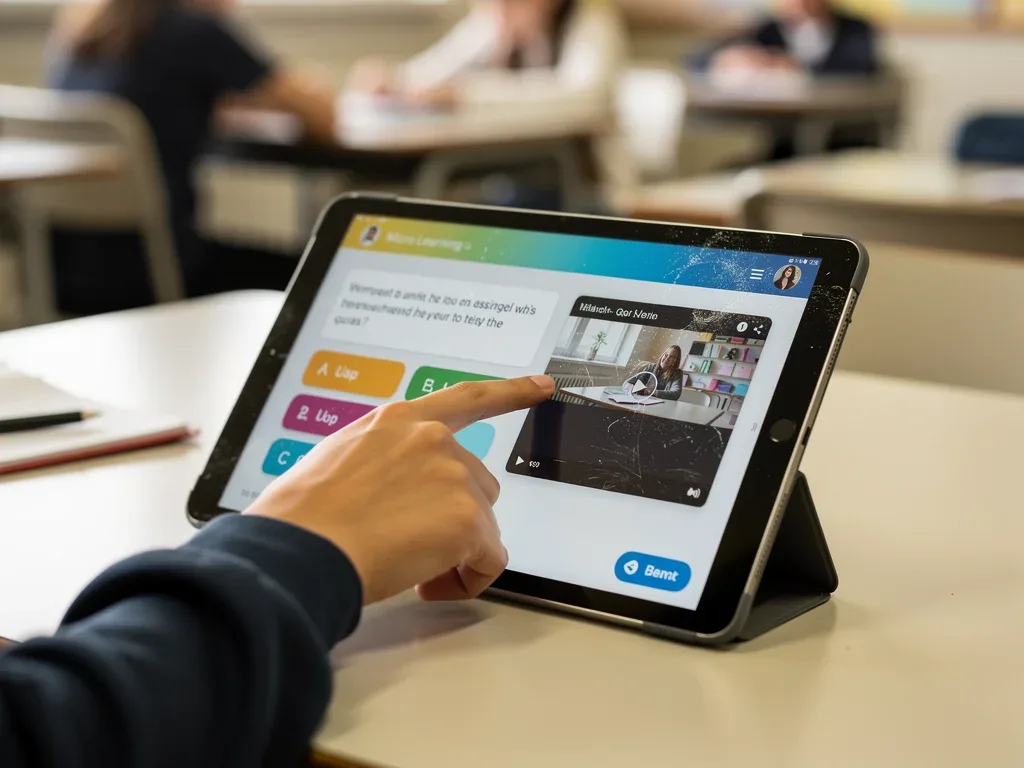
Large assignments can feel intimidating when students are unsure where to begin or how much progress they can make.
Breaking a task into smaller parts provides a clearer starting point and makes it easier to recognize completed work.
For students exploring the 15-minute study rule, the most useful feature may be the opportunity to establish a consistent routine rather than achieve a predetermined level of productivity.
Understanding Micro-Learning and Its Foundation
Micro-learning refers to educational experiences organized into relatively small units, often centered on a particular concept, skill, or learning objective.
These formats can include short instructional videos, practice questions, interactive exercises, flashcards, and focused reading activities.
The 15-minute study rule is one way to organize micro-learning, but there is no single duration that works best for every student, subject, or task.
Cognitive Science Behind Short Study Blocks
Cognitive science examines how people process information, develop knowledge, and retrieve information from memory.
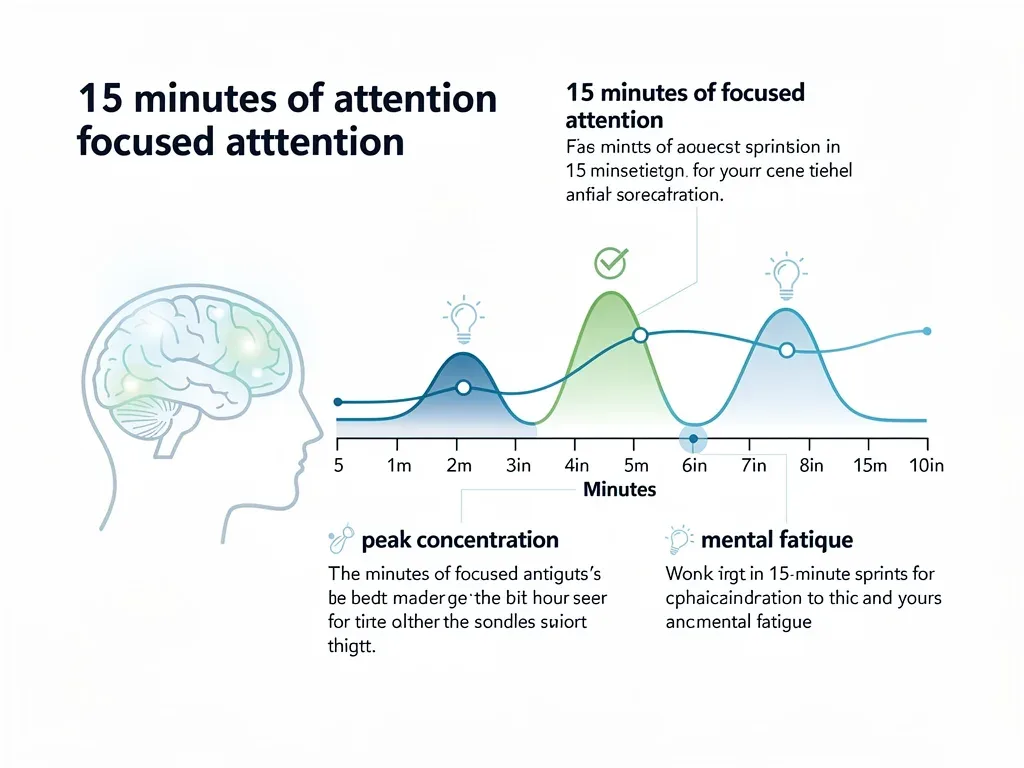
Research provides substantial support for distributed practice and retrieval practice, but it does not establish that attention universally disappears after 15 or 20 minutes.
Students can use the 15-minute study rule as a convenient structure while selecting learning activities supported by stronger educational evidence.
Clear Objectives: Focus on one identifiable learning task.
Distributed Practice: Revisit material across separate sessions over time.
Retrieval Practice: Attempt to remember information without immediately checking notes.
Progress Monitoring: Identify what has been learned and what needs more work.
Why Active Recall Matters More Than the Timer
Active recall involves trying to retrieve previously learned information from memory, such as answering a question before consulting the textbook.
This technique can strengthen learning because students must actively reconstruct information rather than simply reread it.
Within the 15-minute study rule, a short self-test may be more useful for retention than spending the entire session passively reviewing highlighted notes.
Using the 15-Minute Study Rule in U.S. High Schools
High school students can apply brief study blocks to independent learning, homework preparation, or reviews between classroom activities.
Teachers may also use short instructional segments followed by practice, discussion, or feedback, depending on the lesson objectives.
However, the 15-minute study rule is not a nationwide educational requirement, and its adoption should not be described as universal across American schools.
Practical Examples of Micro-Learning
A biology student might spend 15 minutes recalling the stages of cellular respiration before checking which details were missed.
A language learner could practice vocabulary through flashcards, while a history student might create a short timeline from memory.
These examples illustrate how the 15-minute study rule can support focused practice without requiring a particular educational application or subscription.
Mathematics: Solve a small set of problems and review mistakes.
Science: Recall definitions and explain processes.
History: Reconstruct a timeline or answer short questions.
Languages: Practice vocabulary and sentence construction.
Literature: Analyze a passage or summarize an argument.
Combining Short Sessions With Personalized Learning
Students differ in prior knowledge, confidence, subject preferences, and the time they need to complete particular activities.
Teachers can help students choose appropriate exercises and gradually increase difficulty as their understanding improves.
The 15-minute study rule may complement personalized learning plans, provided that learning goals remain more important than following a fixed timer.
Impact on Student Engagement and Performance
Short study sessions may encourage students to begin tasks that otherwise seem too demanding or difficult to organize.
However, completing several brief sessions does not automatically improve examination results or long-term understanding.
When evaluating the 15-minute study rule, educators should consider the quality of learning activities, the student's progress, and whether the method helps achieve actual educational goals.
Addressing Attention and Distractions in the Digital Age
Smartphones, messaging applications, and other digital distractions can interrupt studying when students repeatedly switch between activities.
It is misleading to assume that all Gen Z students have inherently shorter attention spans than previous generations simply because they use digital technology.
For the 15-minute study rule, reducing unnecessary interruptions may be more valuable than attempting to imitate the rapid pace of social media content.
How to Measure Whether the Method Is Working
Students can evaluate a study routine by checking what they remember after the session rather than focusing exclusively on the time spent.
A short quiz, practice problem, or explanation written from memory can reveal whether the material was understood.
If results remain weak, the student may need additional instruction, a different practice method, or a longer session instead of repeating the same routine unchanged.
How to Build a 15-Minute Study Session
A useful study session begins with a specific learning objective that can reasonably be addressed in the available time.
Before starting the 15-minute study rule, students should prepare the necessary materials and reduce avoidable distractions.
The schedule can be adjusted when an activity requires more time or when stopping would interrupt productive concentration.
A Simple 15-Minute Study Structure
Begin by identifying a single objective, such as recalling a set of definitions or solving a particular type of problem.
Spend most of the session working actively, reserving the final few minutes to check answers and identify mistakes.
Use the results to decide whether another session is necessary or whether the material should be reviewed on a different day.
Minutes 1–2: Identify the objective and prepare materials.
Minutes 3–11: Work on the selected learning activity.
Minutes 12–14: Check answers and correct misunderstandings.
Minute 15: Record what to practice next.
Using Breaks Without Interrupting Progress
Brief breaks may help some students manage fatigue, particularly when moving between demanding tasks.
However, there is no universally required break after every 15-minute period, and interruptions can be counterproductive during complex problem-solving.
Students should adapt the 15-minute study rule to their concentration, workload, and physical needs rather than treating the timer as an inflexible limit.
Challenges and Criticisms of the 15-Minute Rule
Short study sessions can become ineffective when complicated subjects are divided into fragments without meaningful connections.
Some learning tasks require extended concentration, particularly when students must analyze texts, develop arguments, or solve multistep problems.
The 15-minute study rule works best as one option within a broader study strategy rather than a replacement for longer periods of focused work.
Ensuring Depth in Micro-Learning
Deep understanding often requires students to connect ideas, explain relationships, and apply knowledge in unfamiliar situations.
Short sessions can introduce concepts or support review, while longer activities may be necessary to explore difficult material thoroughly.
For effective learning, educators should connect individual micro-lessons to broader objectives instead of presenting information as isolated facts.
When a Longer Session Is Better
Writing an essay, completing a laboratory report, or working through advanced mathematics may require uninterrupted time beyond 15 minutes.
Students can still begin with a short planning session before continuing into a longer period of productive work.
The important principle is matching the duration and activity to the task rather than insisting that every assignment fit within the 15-minute study rule.
Why Micro-Learning Cannot Replace Effective Teaching
Educational content must be accurate, developmentally appropriate, and connected to clear learning objectives regardless of its length.
Students also need explanations, guided practice, feedback, and opportunities to demonstrate understanding.
Breaking weak instruction into smaller segments does not automatically make it more effective, so lesson quality remains essential.
Parental and Educator Perspectives
Parents and educators can help students develop study routines that balance consistency, flexibility, and realistic academic expectations.
The 15-minute study rule may offer a useful starting point for students who struggle to begin homework or organize revision.
However, individual needs vary, and families should avoid assuming that shorter study periods are always more effective or less stressful.
Supporting the Transition at Home
Parents can help by providing a suitable study environment and encouraging students to choose a clear objective before starting.
A timer may support organization, but it should not become a source of pressure or punishment when a task requires more time.
Discussing progress with teachers can help ensure that the student's routine supports classroom expectations and broader learning goals.
Helping Students Become More Independent
Students benefit from learning how to identify which subjects need additional practice and which strategies help them remember material.
Teachers and families can encourage students to use self-testing, reflect on mistakes, and plan future review sessions.
Over time, the 15-minute study rule can serve as an organizational tool while students develop greater responsibility for managing their own learning.
The Role of Spaced Practice in Micro-Learning
Spaced practice involves reviewing information across separate sessions instead of concentrating all learning immediately before a test.
Research has consistently found that distributing practice can support long-term retention across different ages and subjects.
Combining spacing with the 15-minute study rule provides a stronger foundation than relying on short study duration alone.
A Practical Weekly Review Example
A student could begin learning vocabulary on Monday, review it briefly on Wednesday, and test recall again on Friday.
During each session, the student should attempt to remember the words before checking the answers.
The timing can be adjusted according to difficulty and progress. The important feature is returning to the material after a meaningful interval.
Combining Retrieval Practice With Feedback
Retrieval practice is most useful when students can check their answers and correct misconceptions.
For example, a learner may attempt five science questions without notes and then review the explanations for any incorrect answers.
Within the 15-minute study rule, this approach supports active learning and provides information about what should be revisited.
Future Outlook: The 15-Minute Rule and Beyond
Digital platforms may continue making short educational activities more accessible through quizzes, instructional modules, and review tools.
However, the future impact of the 15-minute study rule will depend on how well learning activities support understanding, not simply on the popularity of short-form content.
Schools should evaluate new tools using evidence of educational value, accessibility, student needs, and practical implementation costs.
Emerging Technologies and Micro-Learning
AI-assisted platforms may help generate practice questions, recommend review activities, and adjust exercises according to student responses.
Immersive technologies such as virtual reality and augmented reality may also support selected learning experiences where simulations provide meaningful educational benefits.
These tools require thoughtful selection and evaluation. New technology should complement effective teaching rather than replace human guidance, accurate instruction, or meaningful feedback.
What Schools Should Evaluate Before Adopting Micro-Learning
Schools considering short instructional formats should identify the learning outcomes they intend to improve.
They can then examine student progress, teacher feedback, accessibility requirements, and whether micro-learning works well for the subjects involved.
For the 15-minute study rule, a small pilot with clear evaluation criteria is more informative than assuming broad effectiveness based on an unsupported national adoption statistic.
Conclusion
The 15-minute study rule can help high school students organize schoolwork into manageable activities, particularly when they need a clear starting point.
Its usefulness depends on selecting effective learning methods, such as retrieval practice and spaced review, rather than assuming that a particular duration automatically improves memory.
Students, teachers, and families can adapt short study sessions to different subjects and individual needs while preserving time for deeper learning when necessary.
Key Aspect | Brief Description |
|---|---|
Core Principle | Use flexible, focused 15-minute sessions with specific learning objectives. |
Impact on Students | May support task organization and motivation; effectiveness depends on study methods and individual needs, not a verified 80% adoption rate. |
Challenges | Short sessions may not suit complex tasks that require sustained concentration or deeper analysis. |
Future Trends | Digital tools and personalized practice may support micro-learning when combined with evidence-based teaching. |
Frequently Asked Questions About the 15-Minute Rule
What exactly is the 15-Minute Rule in education?▼
The 15-Minute Rule is an informal study strategy that organizes learning into approximately 15-minute blocks. Students use each session to complete a focused task, such as answering practice questions or reviewing vocabulary. It is a flexible time-management method, not a nationally mandated educational standard.
How does micro-learning benefit high school students?▼
Micro-learning can make tasks more manageable and provide opportunities for focused practice. However, short duration alone does not guarantee improved learning. Students benefit most when activities include effective strategies such as retrieval practice, spaced review, and appropriate feedback. These practices can be useful for Gen Z students without assuming that every student learns identically.
Is the 15-Minute Rule effective for all subjects?▼
The method can support review activities across different subjects, but some tasks require longer periods of concentration. Mathematics problem-solving, essay writing, and detailed scientific analysis may not fit into one short block. Students should adapt session lengths according to task complexity and learning needs.
What role does technology play in the 15-Minute Rule?▼
Educational applications can provide flashcards, practice questions, timers, and feedback that help organize short study sessions. However, technology is not required. Students can use paper notes, textbooks, and handwritten quizzes to apply the same methods. The quality of the learning activity matters more than the platform.
How can parents support the 15-Minute Rule at home?▼
Parents can help students create a quiet study environment, identify manageable goals, and schedule realistic study periods. Encouraging breaks when needed and discussing progress can also be helpful. The method should remain flexible, especially when homework requires longer concentration or additional teacher support.
Impact and Implications
The growing interest in short-form learning highlights the importance of helping students manage complex academic tasks through practical study routines.
However, the claim that the 15-minute study rule has reshaped 80% of high school study habits is unsupported by reliable evidence and should not be presented as a verified finding.
Future educational approaches may incorporate AI and immersive technologies, but effective learning will continue to depend on sound instruction, meaningful practice, and appropriate feedback.