Chronoworking Trends: Gen Z's Impact on Biometric Schedules
Advertisements
Chronoworking trends are changing how employers approach flexible schedules, biological rhythms, and employee well-being. Discover Gen Z's influence, the possibilities of biometric technology, and the privacy challenges shaping workplace scheduling in 2026.
Chronoworking trends are gaining attention as employers explore alternatives to rigid schedules and consider how individual energy patterns affect everyday work.
Generation Z has contributed to conversations about workplace flexibility, personal well-being, and professional autonomy. These priorities are encouraging companies to reconsider traditional scheduling practices.
However, chronoworking does not necessarily require biometric monitoring, and claims about widespread adoption deserve scrutiny. Understanding the distinction helps businesses evaluate realistic opportunities and risks.
The Rise of Chronoworking: A Gen Z Imperative
Chronoworking is an approach to scheduling that considers individual biological rhythms and periods of preferred alertness. Its purpose is to organize suitable activities around personal energy patterns.
Some people feel more focused early in the morning, while others prefer working later. Flexible schedules can help accommodate these differences when job responsibilities allow.
The growing discussion reflects broader changes in workplace expectations, including interest in autonomy and work-life balance. These preferences are not exclusive to one generation.
Why Traditional Work Schedules Are Being Questioned
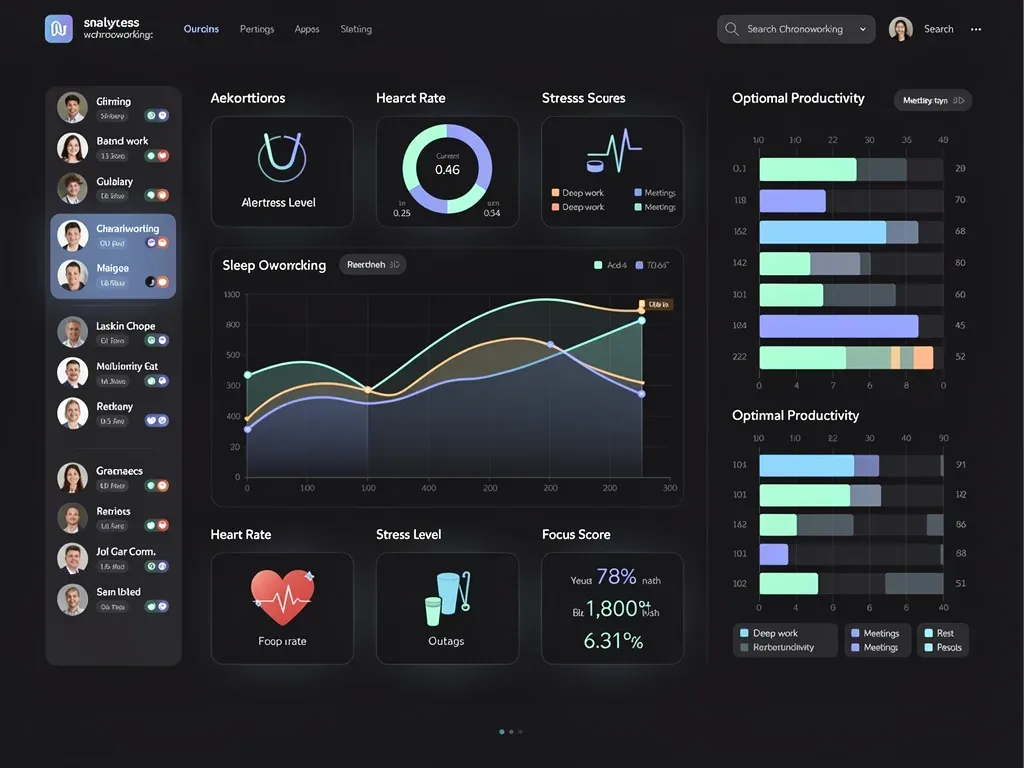
Conventional office schedules often require employees to begin and finish work at similar times. This arrangement supports coordination but may not suit every person's daily routine.
Some workers perform demanding tasks more comfortably at particular hours, depending on sleep patterns and responsibilities. Flexible arrangements can provide room for individual adjustments.
However, businesses still need predictable communication and adequate staffing. Effective chronoworking therefore requires balancing employee preferences with practical organizational needs.
How Biological Rhythms Influence Daily Performance
Human circadian rhythms help regulate sleep, wakefulness, and several physiological processes across the day. Individuals also differ in their preferred timing of sleep and activity.
These preferences are commonly described through chronotypes, including tendencies toward earlier or later schedules. They can influence how comfortable certain working hours feel.
Chronotype alone does not determine productivity or professional ability. Sleep quality, workload, health, and working conditions also influence performance throughout the day.
Gen Z's Influence on Workplace Evolution
Gen Z workplace expectations are part of a wider discussion about flexible hours, professional development, and the relationship between work and personal life.
As younger employees enter different industries, employers are considering how scheduling policies affect recruitment and retention. Flexible arrangements may appeal to workers across multiple age groups.
Although Gen Z contributes to these conversations, there is insufficient evidence to attribute widespread biometric scheduling adoption directly to this generation or any specific percentage.
Defining Chronoworking and Biometric Schedules
Chronoworking allows employees to organize certain responsibilities around preferred periods of alertness. It can involve flexible start times, asynchronous tasks, or adjusted meeting schedules.
Biometric scheduling is different because it uses physiological information collected through devices or monitoring systems. Such information may include sleep estimates, heart rate, or activity measurements.
These approaches should not be treated as interchangeable. Chronoworking can function without collecting health information, while biometric monitoring introduces additional privacy and legal considerations.
Why Flexibility Appeals to Younger Workers
Workplace flexibility can help employees manage commuting, personal responsibilities, and preferred working routines. Its value depends on the job and the individual's circumstances.
Some younger professionals also emphasize mental well-being and opportunities for personal development. These considerations can influence how they evaluate potential employers.
However, generational preferences are diverse and should not be treated as universal. Employers benefit from listening to employees directly instead of relying on broad assumptions.
Education and Changing Professional Expectations
Gen Z's relationship with education reflects broader changes in digital communication, learning environments, and professional preparation.
Many young professionals are familiar with online collaboration and independent learning tools. These experiences may influence their expectations about how work can be organized.
Nevertheless, familiarity with technology does not automatically indicate support for biometric monitoring. Flexible scheduling and employee surveillance represent separate workplace decisions.
The Technology Driving Chronoworking Adoption
Technology can support chronoworking through digital calendars, scheduling platforms, and collaboration tools. These systems make it easier to organize work across different schedules.
More advanced approaches may incorporate wearable devices and physiological measurements. However, such systems require careful evaluation because their data can be sensitive.
For many organizations, ordinary scheduling tools may provide sufficient flexibility without collecting biometric information. The appropriate solution depends on actual operational needs.
Innovations in Biometric Tracking
Modern wearable devices can estimate sleep duration, monitor physical activity, and record certain physiological measurements. These features are primarily designed for personal health and fitness applications.
Some technology providers explore how this information might inform working routines. However, consumer measurements do not directly establish an employee's productivity or cognitive capacity.
Employers should evaluate accuracy, purpose, and privacy requirements before considering workplace applications. Collecting additional data is not automatically necessary or beneficial.
AI-Powered Scheduling Platforms
Artificial intelligence can support scheduling by identifying calendar conflicts, workload patterns, and available meeting times. These functions do not inherently require sensitive personal information.
More experimental systems may attempt to estimate preferred working periods from behavioral or physiological data. Such recommendations should be treated cautiously rather than as objective performance assessments.
Organizations should provide opportunities for employees to review or challenge automated recommendations. Human oversight remains important when technology influences working arrangements.
Digital Calendars and Flexible Collaboration
Shared calendars can help employees communicate their availability while preserving flexibility. Teams may use designated collaboration windows for meetings and coordinated activities.
Outside those periods, workers can organize independent tasks according to their responsibilities and preferences. This arrangement supports flexibility without necessarily changing contractual working hours.
Clear communication remains essential because overlapping schedules may become limited. Managers should establish expectations that support collaboration without creating unnecessary monitoring.
Impact on Companies: Benefits and Challenges
Chronoworking can offer organizations new ways to approach employee autonomy and work organization. Its practical value depends on job requirements and implementation quality.
Flexible schedules may improve satisfaction for some employees, but productivity improvements are not guaranteed. Businesses need appropriate methods to evaluate their results.
Companies considering chronoworking trends should examine operational demands, fairness, data protection, and communication. These factors influence whether a proposed system can function sustainably.
Potential Productivity Benefits
Some employees may find it easier to concentrate when performing demanding tasks during preferred working periods. Flexible arrangements can create opportunities for these adjustments.
However, individual performance depends on more than chronotype. Task complexity, training, sleep quality, leadership, and workplace conditions can all influence outcomes.
Organizations should measure results using appropriate work-related indicators instead of assuming biometric measurements predict productivity. Transparent evaluation provides a stronger basis for scheduling decisions.
Employee Satisfaction and Work-Life Balance
Greater control over scheduling may help workers manage everyday responsibilities. This can be particularly valuable when jobs allow activities to be performed asynchronously.
Flexible schedules may also reduce certain commuting difficulties or conflicts with personal commitments. Their usefulness depends on company policies and individual circumstances.
Employees should have clear expectations about availability and working hours. Without boundaries, flexibility can unintentionally create pressure to remain accessible throughout the day.
Navigating Implementation Hurdles
Introducing chronoworking requires coordination between managers, employees, and operational teams. Different roles may have different requirements for fixed hours and customer availability.
Companies must also consider whether flexible arrangements can be distributed fairly. Workers in on-site or customer-facing positions may have fewer scheduling options.
Pilot programs can help identify problems before broader implementation. Feedback, workload assessment, and clear communication are important for evaluating practical results.
Training Managers for Flexible Teams
Managers may need to adjust their approach when employees work across different schedules. Measuring results becomes more important than simply observing working hours.
Clear objectives and reasonable deadlines support accountability without requiring continuous surveillance. Employees should understand which responsibilities require collaboration and which allow independent scheduling.
Training can also address workload distribution and communication expectations. These practices help organizations maintain consistency while allowing greater individual flexibility.
Gen Z's Push: Why the 40% Claim Requires Scrutiny
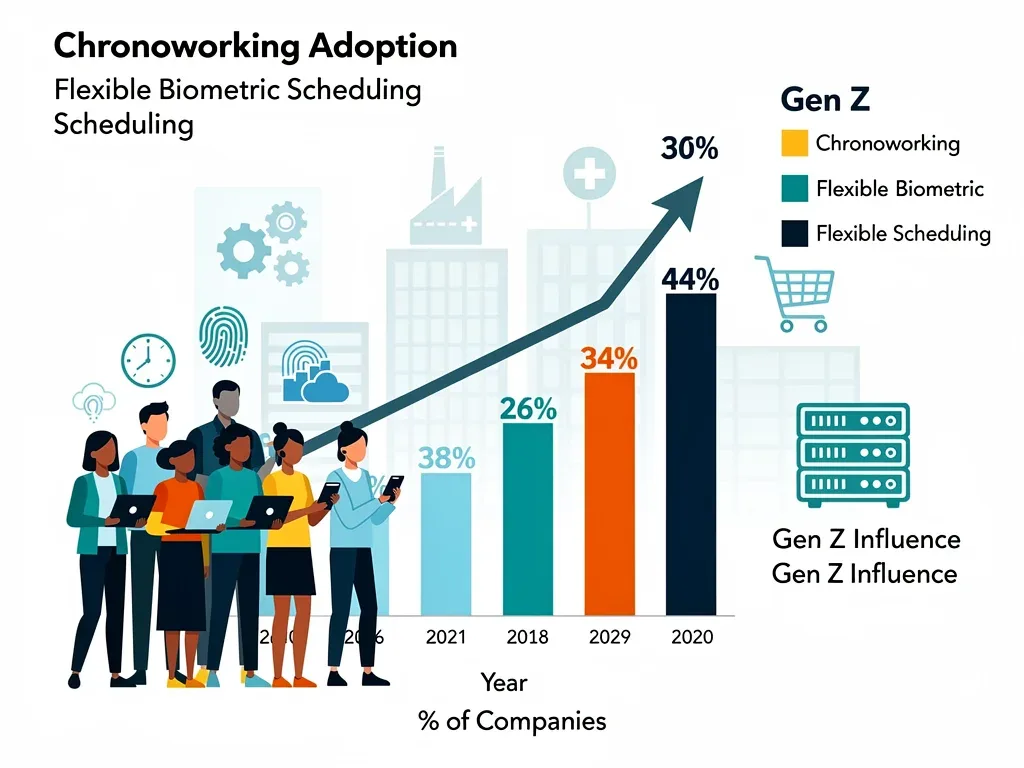
Some discussions about chronoworking trends claim that approximately 40% of companies are adopting biometric schedules because of Gen Z. This figure requires reliable verification.
Without a clearly identified survey, methodology, and definition of adoption, the percentage should not be presented as an established fact. Exploring flexible work is different from deploying biometric technology.
Businesses may be reconsidering scheduling practices, but the scale of biometric adoption remains uncertain. Accurate reporting should distinguish documented developments from unverified industry predictions.
What Would a Reliable Adoption Survey Show?
A credible survey should identify the number of organizations studied, their locations, and the industries represented. These details help readers understand its relevance.
It should also explain whether companies have implemented biometric scheduling or are merely considering it. Different definitions can produce substantially different adoption figures.
Finally, the research should demonstrate how employee preferences influenced employer decisions. Without this evidence, attributing adoption specifically to Gen Z would be speculative.
Economic and Social Drivers
Employers have several reasons to explore flexible scheduling, including recruitment, employee satisfaction, and coordination across time zones. These considerations affect organizations differently.
Remote and hybrid work have also increased interest in asynchronous collaboration. Such arrangements may support scheduling flexibility without requiring physiological monitoring.
Social expectations concerning autonomy and well-being contribute to these discussions. Nevertheless, businesses must balance flexibility with service coverage, operational responsibilities, and employee protections.
Why Flexibility Does Not Require Biometric Monitoring
Many organizations can implement flexible hours by allowing employees to select start times within established limits. Shared calendars can maintain coordination without collecting health information.
Employees may also identify their preferred concentration periods through ordinary conversations or voluntary scheduling preferences. These approaches avoid introducing unnecessary sensitive data collection.
For this reason, biometric systems should not be treated as an essential stage of chronoworking adoption. Less intrusive options may offer sufficient practical benefits.
Future Outlook: Adoption and Ethical Considerations
The future of chronoworking will depend on whether flexible scheduling improves employee experiences without undermining organizational performance. Different industries may adopt different approaches.
Technological developments could expand available scheduling tools, but they may also introduce privacy concerns. Employers should assess whether additional monitoring is genuinely necessary.
Responsible adoption requires clear governance, realistic performance expectations, and meaningful employee participation. These principles are especially important when sensitive information is involved.
Regulatory Landscape and Data Privacy
The use of wearable technology in employment can raise legal questions about medical information and discrimination. Relevant requirements depend on jurisdiction and the intended purpose.
In the United States, the Equal Employment Opportunity Commission has warned that workplace wearables may implicate federal employment discrimination laws and disability protections.
Companies considering biometric monitoring should obtain appropriate legal guidance. Transparency and security controls are important, but employee consent alone may not resolve every legal issue.
Protecting Employee Health Information
Wearable data may contain details about physical conditions, activities, and sleep patterns. Employers should consider whether collecting such information is necessary for scheduling.
When data collection is justified and lawful, organizations need appropriate access controls and retention policies. Employees should understand how information will be handled.
Systems should avoid using questionable physiological estimates to make unsupported judgments about individual performance. Medical or health-related information requires particular care.
Preventing Bias and Discrimination
Automated scheduling systems may produce unfair outcomes when their underlying assumptions fail to reflect individual circumstances. This can affect workers with different health conditions.
Employers should consider accessibility, accommodations, and whether monitoring practices disproportionately affect particular groups. Employees also need appropriate channels to raise concerns.
Fair scheduling should focus on legitimate operational requirements while respecting individual differences. Transparent review processes can help identify and correct unintended problems.
The Role of Education and Psychology
Education and psychology provide useful perspectives on working preferences, motivation, and individual differences. These fields can inform scheduling practices without reducing employees to physiological measurements.
Research involving sleep and biological rhythms may help explain why fixed schedules feel different across individuals. However, findings require careful interpretation before workplace application.
Understanding these subjects can support more thoughtful management. It also helps employees evaluate scheduling tools and question exaggerated claims about their capabilities.
Shaping Young Minds for the Future of Work
Young professionals benefit from learning how to manage time, communicate expectations, and organize responsibilities. These skills remain valuable across different workplace arrangements.
Neuroscience education can introduce concepts related to attention, sleep, and human behavior when grounded in appropriate evidence.
However, educational programs should avoid claiming that a particular chronotype guarantees professional success. Individual strengths depend on many interacting personal and environmental factors.
Chronobiology and Self-Awareness
Chronobiology examines biological rhythms and their relationships with human activity. Understanding these patterns can help individuals reflect on their daily routines.
Employees may notice when they prefer concentrated work or collaborative tasks. These observations can inform reasonable scheduling discussions without requiring medical monitoring.
Personal preferences can also change with age, responsibilities, and sleep conditions. Flexible policies should allow adjustments instead of assigning permanent categories to workers.
Developing Flexible Work Skills
Flexible schedules require time management, communication, and responsibility. Employees need to coordinate deadlines while organizing independent activities within agreed working arrangements.
Training can help workers identify priorities, manage distractions, and communicate availability. These skills are useful even when everyone follows the same schedule.
Cognitive psychology and learning strategies may offer relevant insights into attention and self-management, although workplace effectiveness depends on practical implementation.
Ethical Technology Literacy
Employees increasingly encounter software that collects behavioral or personal information. Understanding data permissions and privacy policies helps them evaluate these technologies.
Training should explain the differences between scheduling assistance and performance surveillance. Workers should know what data a system collects and why.
Organizations also benefit when employees can identify questionable technological claims. Open discussion encourages responsible adoption rather than unquestioning dependence on automated recommendations.
How Companies Can Introduce Chronoworking Responsibly
Organizations interested in chronoworking can begin with simple scheduling changes rather than expensive monitoring systems. This allows practical benefits to be evaluated with fewer privacy concerns.
A structured pilot can assess employee preferences, operational coverage, and communication needs. Results should be reviewed before expanding the approach across teams.
The goal is to create flexibility that supports both workers and organizational responsibilities. Any technological additions should address clearly identified needs.
Start With Voluntary Scheduling Preferences
Employees can be invited to identify preferred working periods within the limits of their roles. Participation should be supported by clear expectations and reasonable alternatives.
Managers can compare these preferences with operational requirements to identify possible adjustments. Not every request will be compatible with every position or schedule.
Using ordinary preference surveys reduces the need to collect sensitive physiological information. This approach provides a practical starting point for exploring chronoworking.
Establish Core Collaboration Hours
Teams may designate limited periods when members are available for meetings and coordinated tasks. Remaining working hours can allow greater independence where appropriate.
Core hours should reflect time zones, customer needs, and reasonable workload expectations. Their purpose is to preserve collaboration without eliminating flexibility.
Regular feedback can help determine whether these arrangements remain useful. Adjustments may be necessary when staffing requirements or team responsibilities change.
Measure Outcomes Instead of Monitoring Bodies
Organizations can evaluate flexible scheduling through work quality, completed responsibilities, and employee feedback. These indicators are directly connected to business operations.
Health measurements should not be treated as automatic substitutes for productivity evidence. A person's heart rate or sleep estimate cannot reliably establish job performance.
Focusing on appropriate outcomes can support accountability while respecting privacy. It also helps avoid unnecessary technological complexity and sensitive data collection.
Chronoworking Trends: Key Takeaways
Chronoworking offers a framework for considering individual scheduling preferences alongside organizational needs. It can be explored through ordinary flexible work policies without biometric monitoring.
Generation Z contributes to conversations about workplace autonomy, but broad adoption claims require reliable evidence. Biometric technologies introduce additional legal and ethical considerations.
The following table summarizes the main concepts and limitations. Employers should evaluate these points before introducing new scheduling systems or employee monitoring tools.
Key Point | Brief Description |
|---|---|
Gen Z's Influence | Contributes to discussions about flexible schedules, autonomy, and workplace well-being. |
Chronoworking Defined | Organizing suitable work activities around individual scheduling and alertness preferences. |
Biometric Schedules | Use physiological information to inform scheduling, introducing additional privacy and legal concerns. |
Company Adoption Rate | The claimed 40% adoption figure has not been established by an identifiable reliable survey. |
Frequently Asked Questions About Chronoworking
What exactly is chronoworking?
Chronoworking is an approach to organizing work around individual biological rhythms and preferred periods of alertness. It may involve flexible starting times or adjustments to task scheduling, and it does not inherently require wearable devices or biometric monitoring.
How are biometric schedules implemented?
Biometric scheduling systems may use physiological measurements collected through wearable devices to suggest working periods. Their use requires careful evaluation of data accuracy, privacy protections, legal obligations, and whether less intrusive alternatives could achieve the same purpose.
Why is Gen Z driving this trend?
Gen Z prioritizes work-life balance and flexibility in many workplace discussions, contributing to interest in alternative schedules. However, these preferences are shared across generations, and there is no verified basis for attributing a 40% biometric scheduling adoption rate specifically to Gen Z.
What are the main benefits for companies?
Potential benefits include improved scheduling flexibility, employee satisfaction, and better coordination of individual preferences with certain tasks. Outcomes depend on job requirements and implementation, and consistent productivity or retention improvements should not be assumed without evidence.
What challenges do companies face with chronoworking?
Challenges include coordinating different schedules, maintaining fair access to flexibility, training managers, and meeting operational requirements. Systems involving biometric information create additional privacy, security, and potential discrimination risks that require appropriate safeguards.
Looking Ahead: The Evolving Workplace
Chronoworking trends reflect growing interest in flexible schedules that account for individual differences. Their future will depend on practical benefits, employee preferences, and organizational requirements.
Biometric technology may influence some experimental approaches, but it is not necessary for chronoworking. Employers should prioritize transparent policies and less intrusive scheduling options where possible.
By balancing flexibility with privacy, fairness, and measurable outcomes, organizations can explore new working arrangements responsibly. The strongest approaches will support employees without introducing unnecessary surveillance.