Digital Burnout: 47% Zoomers Adopt Dumbphones in Q1 2026
Advertisements
How Digital Burnout Led raises an important question about Generation Z and changing technology habits. However, the claim that 47% of Zoomers adopted basic phones during the first quarter of 2026 has not been verified by reliable nationwide research.
The Gen Z dumbphone trend 2026 reflects growing interest in simpler devices, fewer notifications, and more intentional relationships with digital technology. Some younger consumers are exploring alternatives to smartphones as they reconsider how constant connectivity affects everyday life.
These conversations also connect with broader concerns about mental health challenges, social media pressures, sleep habits, and the difficulty of separating online activities from personal time.
Understanding this movement requires distinguishing documented internet usage patterns from unverified claims about device adoption. This guide explores the motivations behind dumbphone interest, practical benefits, possible limitations, and the future of digital well-being.
The Alarming Rise of Digital Burnout Among Gen Z
Digital burnout is commonly used to describe feelings of exhaustion, frustration, or mental overload associated with persistent online engagement and frequent digital demands.
For younger users, smartphone notifications, social media feeds, school assignments, and constant communication can make it difficult to establish clear boundaries around technology use.
The Gen Z dumbphone trend 2026 illustrates one possible response to these pressures, although digital fatigue affects individuals differently and does not automatically lead to abandoning smartphones.
Understanding the Digital Fatigue Epidemic
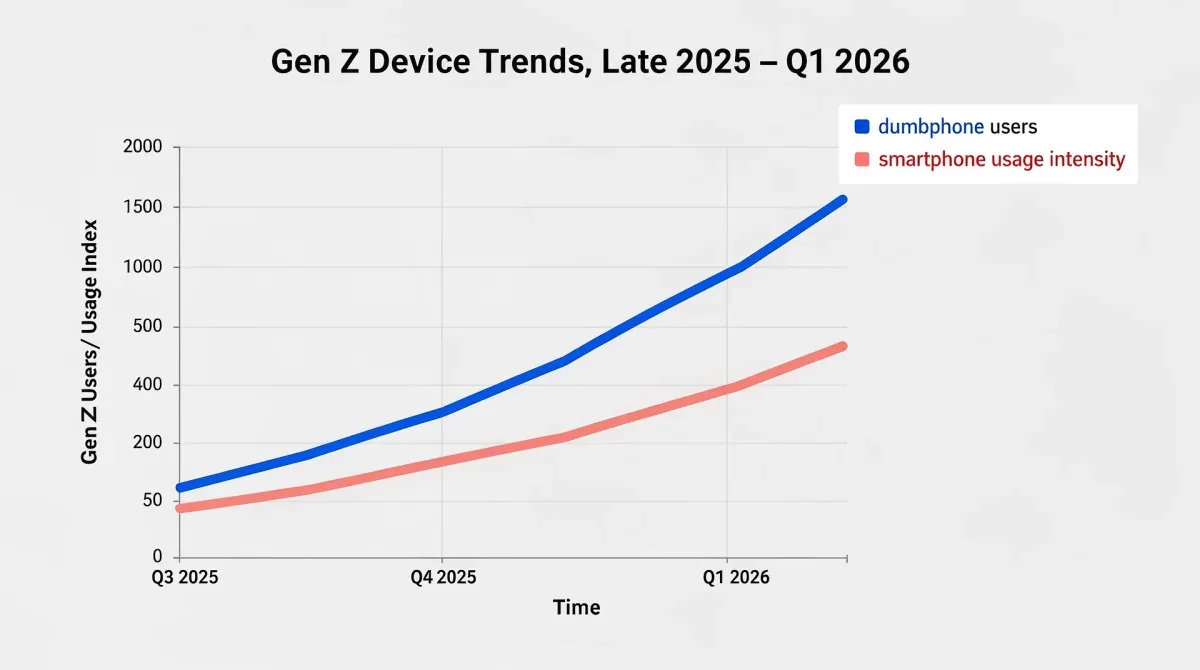
Digital fatigue can develop when online activities compete continuously for attention, especially when users experience pressure to respond immediately or remain available throughout the day.
Research involving Gen Z learning and cognitive habits also raises questions about concentration, interruptions, and how digital environments influence study routines.
Within the Gen Z dumbphone trend 2026, some users may choose to reduce their exposure to social media rather than remove every digital service from their lives.
Frequent Notifications: Repeated alerts can interrupt attention and daily activities.
Social Comparison: Some online environments encourage constant comparison with others.
Information Overload: Large volumes of content can become difficult to manage.
Limited Boundaries: Constant availability may interfere with rest and personal routines.
How Digital Burnout Led 47% of Zoomers to Adopt Dumbphones in the First Quarter of 2026
The widely stated figure that 47% of Zoomers adopted dumbphones during January through March 2026 cannot be treated as a verified nationwide adoption rate without supporting research.
Reliable demographic evidence would require a clearly identified survey or market study describing its sample, methodology, definition of dumbphone ownership, and period of measurement.
The Gen Z dumbphone trend 2026 can still be examined as a consumer and lifestyle phenomenon, but individual experiences and online conversations do not establish that nearly half of an entire generation changed phones.
The Appeal of Simplicity: Why Dumbphones?
Dumbphones generally emphasize essential communication functions, including calls and text messages, rather than the broad collection of applications available on contemporary smartphones.
Some models include limited internet access or selected applications, while others provide only basic features. This variation allows consumers to decide how much connectivity they want to retain.
For people exploring the Gen Z dumbphone trend 2026, simpler phones may reduce certain distractions, although their usefulness depends on daily responsibilities and the services required for work, school, and transportation.
Fewer Applications: May reduce opportunities for habitual scrolling.
Simplified Communication: Focuses on essential calls and messages.
Different Costs: Some basic phones are affordable, although specialized minimalist devices can be expensive.
Practical Limitations: Banking, navigation, authentication, and messaging functions may be unavailable.
The Impact on Mental Health and Productivity
Reducing unnecessary digital interruptions may help some people create more focused routines, but replacing a smartphone does not guarantee improvements in mental health or productivity.
Online activities can offer valuable social support, educational resources, and important communication tools, making the effects of technology use dependent on individual circumstances.
Discussions surrounding the Gen Z dumbphone trend 2026 should therefore consider both the possible benefits of reducing unwanted screen time and the practical advantages of remaining connected.
Reclaiming Attention and Focus
Intentional technology use begins with identifying which activities are meaningful and which repeatedly interrupt responsibilities, rest, or face-to-face interactions.
Users may experiment with disabling nonessential notifications, placing phones away during study sessions, or scheduling specific periods for checking social media accounts.
These changes can be tested before purchasing another device, making the Gen Z dumbphone trend 2026 part of a broader conversation about attention management rather than a requirement to abandon smartphones.
Societal Implications and Future Trends
Interest in simplified technology raises questions about whether consumers need increasingly complex devices for every aspect of daily communication and entertainment.
While smartphones remain central to many services, minimalist devices and software settings demonstrate that different levels of connectivity can meet different needs.
The Gen Z dumbphone trend 2026 may encourage continued discussion about technology design, but claims about widespread demographic change require evidence beyond social media popularity.
A Call for Mindful Technology Design
Technology developers can support more intentional usage through notification controls, accessible privacy settings, clearer time-management tools, and interfaces that reduce unnecessary interruptions.
Features such as scheduled focus modes, application limits, and configurable alerts already provide alternatives for people who want fewer distractions without changing devices.
Within the Gen Z dumbphone trend 2026, the central design question is how technology can remain useful while allowing users greater control over their attention and daily routines.
Economic and Market Shifts in Response to Dumbphone Adoption
Basic mobile phones remain available in parts of the consumer electronics market, serving users interested in simple communication, backup devices, or particular accessibility requirements.
However, the existence of minimalist phone products does not prove a dramatic collapse in smartphone demand or a nationwide shift among younger American consumers.
Understanding the economic implications of the Gen Z dumbphone trend 2026 requires reliable sales information, market research, and evidence about how consumers actually use these devices.
Investment and Innovation in Basic Devices
Manufacturers can differentiate simpler phones through features such as battery performance, physical keyboards, durable construction, accessible controls, and support for current mobile networks.
Modern minimalist devices may also incorporate selected features such as navigation or limited messaging, creating a middle ground between traditional feature phones and full smartphones.
For the Gen Z dumbphone trend 2026, future product development will likely depend on practical demand, affordability, network compatibility, and whether consumers find these alternatives convenient enough for regular use.
Personal Stories: Voices from the Dumbphone Movement
Individual accounts of switching to simpler phones can provide useful insight into why some people want fewer digital distractions or more predictable communication habits.
Such experiences may involve spending less time on social media, returning to offline hobbies, or finding alternative ways to organize daily activities without relying on multiple phone applications.
However, these stories should not be treated as representative survey evidence, since the Gen Z dumbphone trend 2026 includes different motivations, experiences, and levels of commitment.
Finding Freedom in Disconnection
For some users, reducing the number of available applications can make it easier to resist habitual checking and establish boundaries around unnecessary online activities.
Others may prefer keeping a smartphone but changing its settings, removing particular applications, or using separate devices for work and personal communication.
The Gen Z dumbphone trend 2026 reflects these different approaches to digital minimalism, emphasizing individual preferences rather than a single solution that works for everyone.
Policy and Educational Responses to Digital Burnout
Schools, families, and policymakers continue discussing how digital technology influences learning environments, social relationships, sleep habits, and adolescent well-being.
Some educational initiatives focus on classroom phone restrictions, media literacy, and helping students recognize when online activities interfere with important responsibilities.
The debate surrounding the Gen Z dumbphone trend 2026 connects with these broader discussions, although public policy decisions should rely on established evidence rather than unsupported adoption statistics.
Promoting Digital Wellness in Young Minds
Digital wellness education can encourage students to recognize unhealthy usage patterns, manage notifications, evaluate online content, and maintain time for sleep and physical activity.
According to the Pew Research Center's 2025 study of American teenagers, approximately 40% reported being online almost constantly, illustrating the importance of understanding digital habits without confusing internet usage with dumbphone adoption.
These findings provide context for the Gen Z dumbphone trend 2026, while reminding readers that supporting healthier technology use may involve education, appropriate boundaries, and individual choices rather than one specific device.
The Future of Connectivity: Beyond the Smartphone Monoculture

Future mobile technology may offer consumers more choices between comprehensive smartphones, simplified devices, and software environments designed around reduced distraction.
However, modern transportation systems, financial services, authentication tools, and workplace applications increasingly rely on smartphone functionality, creating practical barriers to abandoning these devices completely.
The Gen Z dumbphone trend 2026 highlights this tension between digital convenience and personal boundaries, suggesting opportunities for products that combine essential connectivity with more controlled usage.
Redefining Digital Engagement
Digital engagement does not need to be measured exclusively by screen time, application activity, or the frequency with which users interact with online platforms.
Communication quality, access to helpful information, learning opportunities, and meaningful social connections also contribute to whether technology improves everyday life.
As conversations about the Gen Z dumbphone trend 2026 continue, the most constructive approach may involve helping individuals choose technology habits that support their needs without relying on exaggerated claims about generational behavior.
Key Point | Brief Description |
|---|---|
Gen Z Digital Burnout | Some younger users report concerns about constant connectivity, digital interruptions, and difficulty maintaining boundaries. |
Dumbphone Adoption | The claim that 47% of Zoomers adopted basic phones in Q1 2026 has not been substantiated by reliable nationwide evidence. |
Mental Health Impact | Reducing unwanted interruptions may help some individuals, but mental health outcomes vary and are not guaranteed by changing devices. |
Future Tech Trends | Interest in minimalist devices may encourage more intentional technology design and user-controlled connectivity. |
Frequently Asked Questions About Dumbphone Adoption
Why are Zoomers adopting dumbphones?▼
Some members of Gen Z are interested in dumbphones because they want fewer digital distractions, simpler communication, or more time away from social media. Motivations vary, and there is no verified nationwide evidence showing that nearly half of Zoomers changed to basic phones during early 2026. These choices may form part of broader efforts to support mental well-being.
What is digital burnout?▼
Digital burnout is a commonly used term for feelings of exhaustion or overload associated with persistent digital demands, frequent interruptions, or difficulty disconnecting. It is not a single, universally defined medical diagnosis. Individual experiences and underlying causes may vary considerably.
What are the benefits of using a dumbphone?▼
A basic phone may help some users reduce access to distracting applications, limit unnecessary notifications, and simplify communication routines. However, the benefits depend on personal habits, and a dumbphone may not support navigation, banking, authentication, or essential messaging services required in daily life.
How significant is this trend for Gen Z?▼
The Gen Z dumbphone trend 2026 is relevant as an example of growing interest in intentional technology use, but its actual adoption rate remains uncertain. The widely repeated 47% figure for the first quarter of 2026 should not be treated as verified without a credible underlying study.
Will this trend affect future tech development?▼
Interest in simpler devices could influence product design, particularly features that give users greater control over notifications, applications, and screen time. However, the scale and commercial impact of this influence remain uncertain, and future developments will depend on consumer demand and practical technology requirements.
What this means
The Gen Z dumbphone trend 2026 highlights an important discussion about digital habits, attention, and the role of personal technology in everyday life.
Although the original claim that 47% of Zoomers adopted dumbphones in the first quarter of 2026 lacks reliable verification, research confirms that frequent internet use remains common among American teenagers.
Rather than assuming that everyone needs to abandon smartphones, individuals can evaluate which digital activities are useful, reduce unnecessary interruptions, and select devices or settings that better support their personal priorities.