Money Dysmorphia Alert: Social Media Fuels Youth Anxiety Surge
Advertisements
Money Dysmorphia Alert: Examining Youth Financial Anxiety and the Unverified 52% Surge Claim explores how social media comparisons, spending pressure, and unrealistic financial expectations can influence younger generations.
Although a widely repeated 52% increase in youth anxiety has not been substantiated by the available evidence, research on money dysmorphia reveals important concerns about financial confidence, spending habits, and emotional well-being.
Money dysmorphia youth anxiety has become an important topic as young Americans navigate financial uncertainty while encountering idealized lifestyles, luxury purchases, and wealth-focused content across social media.
The term describes a perceived disconnect between someone's actual financial circumstances and how financially successful or unsuccessful they believe themselves to be. This feeling can influence spending decisions, confidence, and personal goals.
Although claims of a 52% surge in youth anxiety require stronger evidence, existing survey findings suggest that financial insecurity and distorted money perceptions deserve attention from young adults, families, educators, and financial professionals.
Understanding Money Dysmorphia and Its Roots
Money dysmorphia refers to a distorted perception of personal finances, particularly when individuals feel financially inadequate despite circumstances that may not fully support that conclusion.
The expression is commonly used in financial wellness discussions, but it is not an independently established clinical diagnosis. It describes a pattern of financial self-perception rather than a specific mental health disorder.
Understanding money dysmorphia youth anxiety requires considering personal financial experiences, economic pressures, social expectations, and the influence of online comparisons without assuming that one factor explains every experience.
The Psychological Impact of Financial Misperception
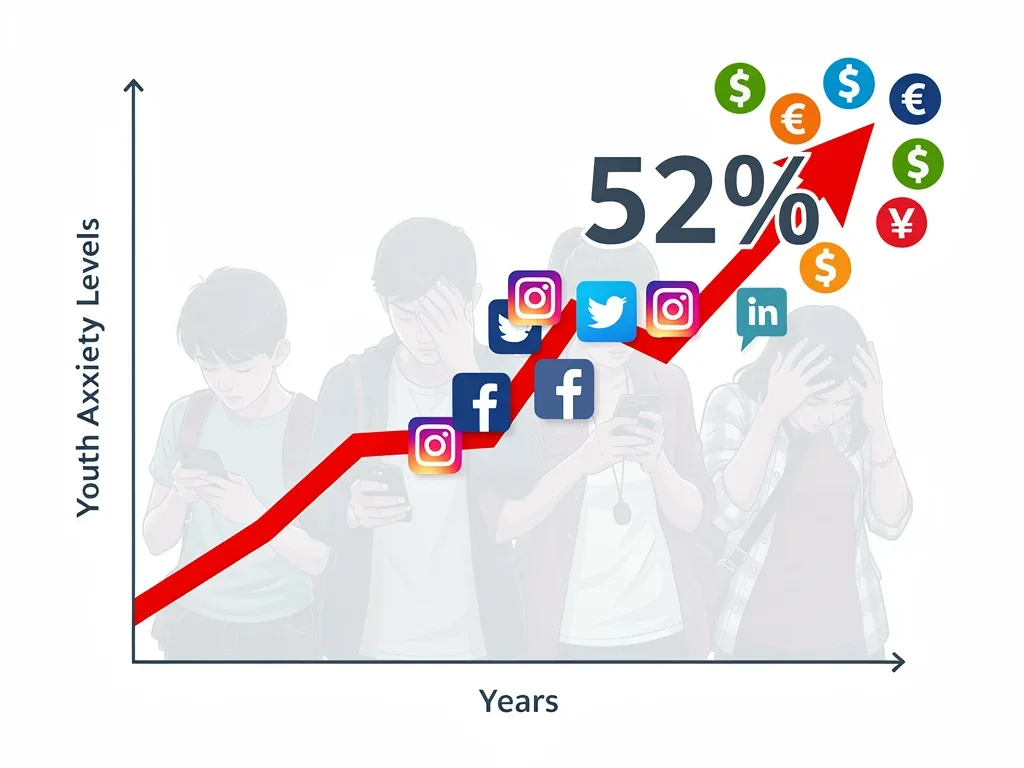
When young people repeatedly compare their finances with carefully selected images of wealth, they may begin to underestimate their own financial progress or feel pressured to achieve unrealistic milestones.
These comparisons can contribute to worry, dissatisfaction, or impulsive financial decisions for some individuals. However, experiences differ, and researchers must distinguish associations from demonstrated causes.
Recognizing money dysmorphia youth anxiety can encourage healthier conversations about financial expectations, especially when emotional reactions become disconnected from actual income, expenses, savings, and debt.
Financial Insecurity: Feeling persistently behind despite having manageable finances.
Comparison-Driven Spending: Making purchases primarily to match perceived lifestyles.
Planning Avoidance: Delaying budgets or financial reviews because money feels overwhelming.
Unrealistic Expectations: Measuring personal success against unusually wealthy online personalities.
Social Media's Role in Amplifying Financial Anxiety
Social media provides access to entertainment, personal stories, financial information, and shopping recommendations, but the content people encounter rarely represents a complete picture of someone's circumstances.
Luxury travel, expensive clothing, high-end apartments, and apparently effortless wealth can create misleading comparisons when audiences do not see sponsorship arrangements, borrowing, family support, or financial trade-offs.
The relationship between money dysmorphia youth anxiety and online content deserves careful consideration because repeated exposure may influence individual expectations, although not every user responds in the same way.
The 'Comparison Trap' and Its Financial Consequences
The comparison trap occurs when people evaluate their own progress primarily against the visible achievements or possessions of others, often without understanding the circumstances behind those displays.
For younger consumers, this process can create pressure to purchase fashionable products, attend expensive events, or maintain an online identity that exceeds their financial resources.
When these decisions become habitual, financial comparison may contribute to unnecessary spending or debt, reinforcing the concerns associated with money dysmorphia youth anxiety.
Unplanned Purchases: Spending on products primarily because they appear popular online.
Financial Pressure: Feeling compelled to match another person's apparent lifestyle.
Delayed Savings: Redirecting money from personal goals toward short-term consumption.
Emotional Comparison: Interpreting another person's displayed wealth as evidence of personal failure.
The 52% Surge in Youth Anxiety: A Deep Dive
The claim that youth anxiety increased by 52% specifically because of social media spending requires a clearly identified study, comparison period, population, and method before it can be presented as a verified finding.
The available source material does not identify that evidence. Without it, the percentage should not be treated as an established national trend or a demonstrated consequence of social media consumption.
More reliable information about money dysmorphia youth anxiety comes from research that identifies its survey population and measures what respondents actually reported rather than attributing unexplained changes to a single cause.
Generational Differences in Financial Stress
A survey conducted by Qualtrics for Intuit Credit Karma in December 2023 questioned 1,006 American adults about their financial perceptions and reported that 43% of Gen Z respondents experienced money dysmorphia.
The same survey found that 41% of millennials reported similar experiences, while 48% of Gen Z respondents and 59% of millennials said they felt financially behind. These are self-reported survey findings, not clinical diagnoses.
For Gen Z, these results highlight the importance of understanding financial expectations, but they do not establish that anxiety rose by 52% or that online spending directly caused such an increase.
Impact on Gen Z: Financial Literacy and Mental Health
Gen Z has grown up with digital payment systems, online shopping, financial influencers, and investment information that can be accessed almost instantly through mobile devices.
While these technologies offer convenience and opportunities to learn, they can also expose inexperienced consumers to misleading financial promises, aggressive marketing, and pressure to make rapid purchasing decisions.
Addressing money dysmorphia youth anxiety therefore involves developing realistic financial knowledge alongside the ability to evaluate online information critically and recognize when financial concerns affect emotional well-being.
Building Financial Resilience in a Digital Age
Financial resilience begins with understanding actual financial circumstances, including regular income, necessary expenses, outstanding obligations, and the resources available for savings.
Creating achievable goals and monitoring progress can help young adults evaluate their finances according to personal needs rather than the lifestyles presented by influencers or acquaintances.
For readers concerned about money dysmorphia youth anxiety, practical budgeting and thoughtful media consumption can provide more reliable reference points than comparisons with strangers online.
Strategies to Mitigate Money Dysmorphia and Anxiety
Managing financial stress often starts with identifying the situations that trigger unrealistic expectations, unnecessary purchases, or persistent concerns about personal financial success.
Young adults can begin by reviewing spending patterns, establishing manageable savings goals, and separating essential expenses from purchases influenced mainly by social pressure.
These approaches may help address some behaviors associated with money dysmorphia youth anxiety, although persistent or severe anxiety may also require support from a qualified mental health professional.
Promoting Financial Literacy and Mental Health Resources
Financial education can provide practical tools for understanding budgets, credit, debt, saving, and the consequences of decisions that affect financial stability over time.
The Consumer Financial Protection Bureau's official youth financial education resources offer age-appropriate activities and educational guidance designed to strengthen financial knowledge and decision-making skills.
Combining financial literacy with supportive conversations about emotional well-being can help young people approach money dysmorphia youth anxiety without treating ordinary financial uncertainty as a personal failure.
The Role of Parents and Educators in Shaping Financial Futures
Parents and educators can influence young people's financial development by encouraging realistic expectations, open communication, and practical decision-making experiences.
Instead of focusing exclusively on income or possessions, financial discussions can explore everyday expenses, savings priorities, advertising techniques, and the differences between needs and wants.
Understanding money dysmorphia youth anxiety also means recognizing that young adults encounter financial messages through entertainment platforms, social networks, and online personalities as well as traditional educational sources.
Fostering Healthy Financial Habits from an Early Age
Age-appropriate financial education can begin with simple spending and saving decisions before progressing toward budgeting, credit management, and longer-term planning.
Teenagers may benefit from tracking small expenses, comparing prices, and discussing how advertising or peer expectations can influence purchasing behavior.
Consistent guidance can help young people build confidence and evaluate their progress realistically, reducing some of the uncertainty commonly discussed in relation to money dysmorphia youth anxiety.
Policy and Platform Responsibility in Digital Financial Well-being

Social media companies, advertisers, and policymakers all influence the digital environment in which younger audiences encounter financial information and lifestyle marketing.
One important issue involves transparency around sponsored content because paid promotions can resemble personal recommendations when financial relationships are not clearly disclosed.
Discussions about money dysmorphia youth anxiety should therefore consider consumer protection, advertising literacy, and digital well-being without assuming that restricting aspirational content alone would resolve financial stress.
Ethical Design and Content Moderation for a Healthier Online Space
Platform design can influence which content users encounter and how easily they recognize advertising, sponsorships, and other forms of commercially motivated communication.
Clear disclosures, accessible account controls, and tools for managing content preferences can help users make more informed decisions about the financial messages they consume.
Efforts to address money dysmorphia youth anxiety are likely to be more useful when they combine financial education, transparent marketing practices, and appropriate support for people experiencing distress.
Key Point | Brief Description |
|---|---|
Money Dysmorphia | A distorted perception of personal finances that may influence confidence and financial decisions; it is not a formal clinical diagnosis. |
Youth Anxiety Surge | The claimed 52% increase has not been substantiated. A 2023 survey found that 43% of Gen Z respondents reported money dysmorphia. |
Social Media Influence | Curated lifestyles and commercial content may encourage unrealistic financial comparisons and purchasing expectations. |
Mitigation Strategies | Financial education, realistic goal-setting, critical media literacy, and appropriate mental health support can help address related concerns. |
Frequently Asked Questions About Money Dysmorphia and Youth Anxiety
What exactly is money dysmorphia?▼
Money dysmorphia is an informal term describing a distorted perception of personal finances. People may feel financially unsuccessful despite having manageable resources or evaluate themselves against unrealistic standards. It is not a formal psychiatric diagnosis, but the feelings associated with it can be meaningful.
How does social media contribute to youth anxiety regarding money?▼
Social media can expose young people to highly curated displays of wealth, luxury purchases, and financial success. These portrayals may encourage unfavorable comparisons, although the effect varies by individual and does not prove that social media causes every experience of money dysmorphia youth anxiety.
What are the signs of money dysmorphia in young people?▼
Possible signs include persistent dissatisfaction with personal finances, frequent comparisons with wealthier individuals, unnecessary spending to maintain an image, or avoiding financial decisions because they feel overwhelming. These behaviors are not specific enough to establish a mental health diagnosis.
What can parents and educators do to help?▼
Parents and educators can discuss realistic financial expectations, teach budgeting skills, encourage critical evaluation of advertising, and create opportunities for young people to ask questions about money. Emotional support is also important when financial concerns become distressing.
Are there long-term solutions for this issue?▼
Long-term approaches include accessible financial education, improved understanding of sponsored content, stronger money management habits, and appropriate mental health support. These measures can help individuals develop healthier financial expectations while addressing some concerns associated with money dysmorphia youth anxiety.
What Happens Now
Growing interest in money dysmorphia youth anxiety reflects broader concerns about financial confidence, social comparison, and the challenges young consumers face when navigating an increasingly digital economy.
Future research should examine how financial perceptions change over time and distinguish the effects of social media exposure from housing costs, employment conditions, household finances, and other influences on emotional well-being.
For Gen Z, building financial knowledge and healthier expectations can support informed decisions without defining personal success through online displays of wealth.