Neurodiversity Advocacy: Gen Z Pushes for Sensory-Friendly Education
Advertisements
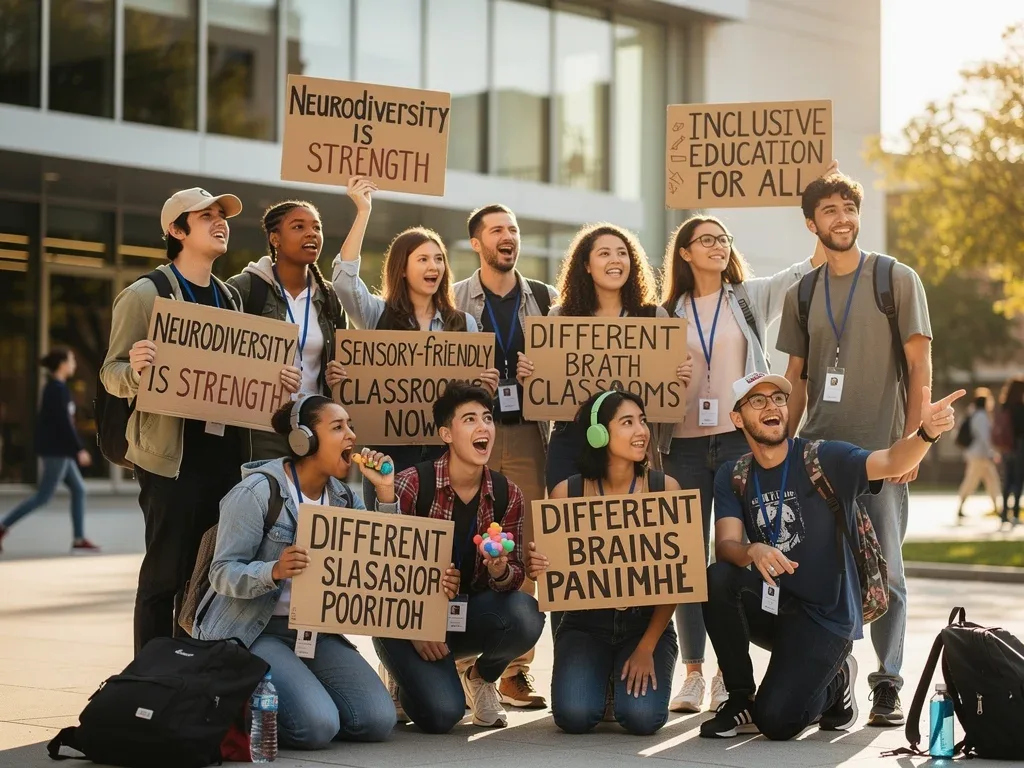
Neurodiversity Advocacy and Sensory-Friendly Educational Spaces is becoming a more visible part of conversations about accessibility, student well-being, and inclusive learning in the United States.
Gen Z students are participating in these discussions through campus organizations, disability advocacy groups, student government, peer networks, and broader conversations about accessibility and mental health.
However, there is no reliable evidence showing that exactly 68% of Gen Z students are actively advocating for sensory-friendly educational spaces, so that figure should not be presented as a verified statistic.
The Rise of Neurodiversity Advocacy Among Gen Z Students
Neurodiversity advocacy promotes the idea that neurological differences are part of human variation and that learning environments should be designed to reduce unnecessary barriers.
Students increasingly discuss issues such as sensory overload, executive-function barriers, inflexible classroom structures, and access to academic accommodations.
This advocacy can influence how institutions think about classroom design, disability services, teaching methods, and student participation.
Understanding Sensory-Friendly Educational Spaces
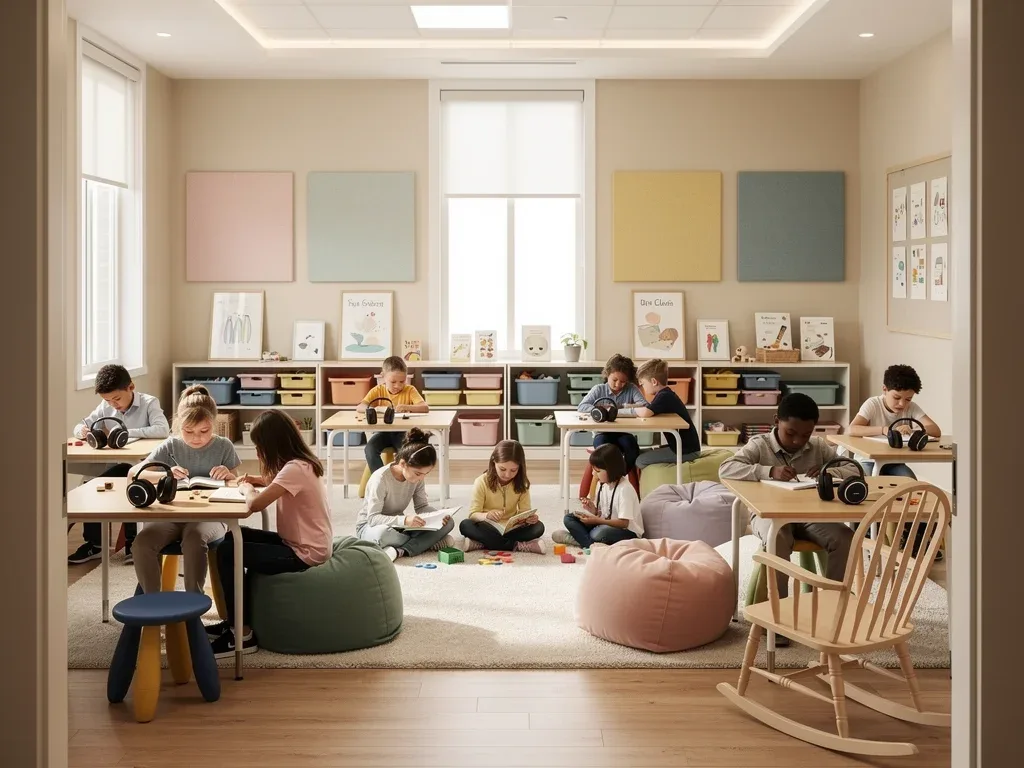
Sensory-friendly spaces aim to reduce unnecessary sensory demands that may interfere with concentration, participation, or comfort.
Depending on the setting, that can involve lighting, background noise, visual clutter, seating flexibility, room layout, predictable routines, or access to quieter spaces.
These changes should not be treated as one universal formula because students can have very different sensory preferences and accommodation needs.
Key Elements of Sensory-Friendly Design
Universal Design for Learning encourages educators to anticipate learner variability rather than waiting until barriers appear.
Current CAST guidance specifically recommends varying sensory stimulation, including background noise, visual input, pace, breaks, and predictability.
Institutions can combine those general design principles with individualized accommodations where disability law requires more specific support.
Adjustable or less intrusive lighting where feasible.
Quiet zones or options that reduce background noise.
Flexible seating and multiple ways to participate.
Reduced visual clutter when it interferes with learning.
Clear schedules, warnings about changes, and predictable routines.
What U.S. Disability Law Requires
Section 504 of the Rehabilitation Act and the Americans with Disabilities Act prohibit disability discrimination in many educational settings.
At the postsecondary level, qualified students with disabilities may be entitled to academic adjustments, auxiliary aids, or services necessary to provide equal opportunity.
The required adjustment is individualized, and schools are not required to make changes that fundamentally alter an academic program or create an undue burden.
College Students Must Usually Request Accommodations
In higher education, students generally have more responsibility for identifying their disability and requesting accommodations than they did in K-12 education.
Colleges may require students to follow reasonable procedures and provide appropriate documentation when requesting adjustments.
This distinction is important because a university is not automatically required to identify every student's accommodation needs without a request.
Gen Z's Role in Policy and Practice
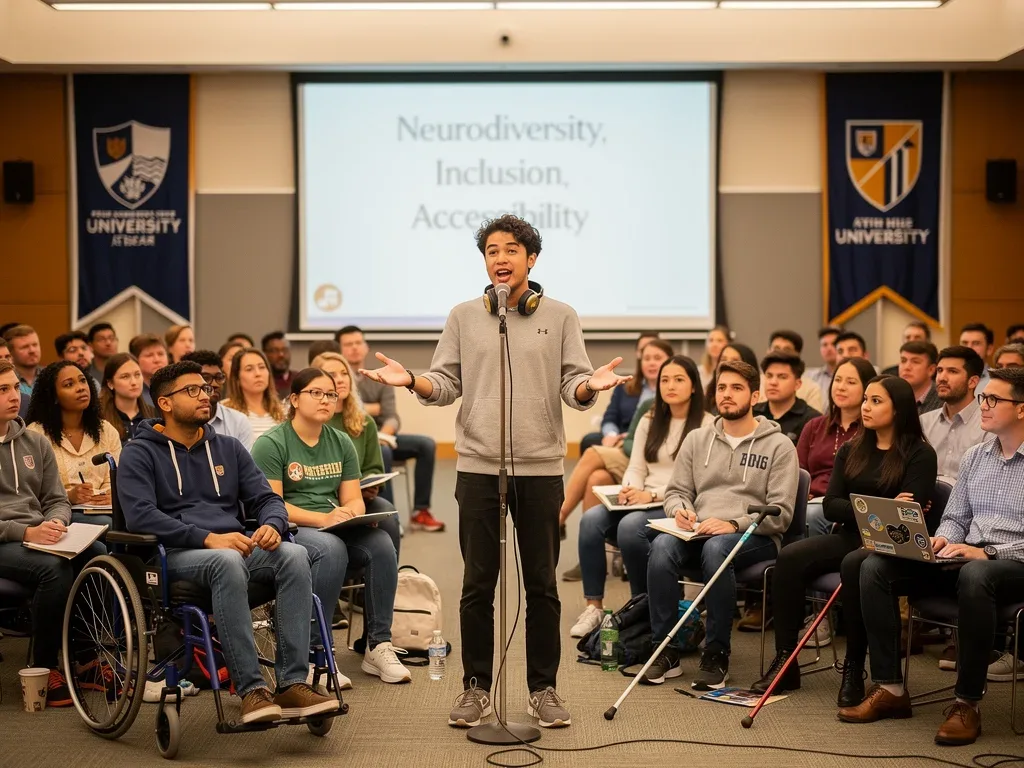
Student advocacy can influence campus policy by drawing attention to barriers that may not be obvious to administrators or faculty.
Students can participate through disability advisory groups, student government, accessibility committees, public forums, or direct consultation with campus offices.
The strongest advocacy efforts focus on specific barriers and workable changes rather than assuming one sensory solution will help every neurodivergent student.
Student-Led Initiatives
Student groups can advocate for quiet study areas, clearer accommodation procedures, faculty training, or more flexible ways to engage with coursework.
They may also encourage institutions to consult neurodivergent students before redesigning classrooms or implementing accessibility policies.
These efforts are most credible when they are based on documented student needs and evaluated after implementation.
Quiet study spaces or lower-stimulation rooms.
Faculty training on disability and neurodiversity.
Clearer information about accommodation procedures.
Multiple ways to participate in class where appropriate.
Challenges and Opportunities in Neurodiversity Advocacy
Institutions can face practical limits involving funding, building design, staffing, competing accessibility needs, and uncertainty about which interventions are most effective.
Another challenge is avoiding assumptions that all autistic, ADHD, dyslexic, or otherwise neurodivergent students need the same environment.
The opportunity is to combine inclusive design with individualized accommodations so that common barriers are reduced without replacing person-specific support.
The Role of Technology in Inclusive Learning
Technology can support accessibility when it gives students more control over how information is received, organized, or communicated.
Examples include text-to-speech, speech-to-text, screen-reading tools, captioning, scheduling software, and digital materials that can be adjusted by the user.
The usefulness of each tool depends on the individual learner and the specific barrier being addressed.
Technology Should Support Choice
Universal Design for Learning encourages multiple ways of perceiving information and multiple ways of interacting with learning materials.
Accessible digital design can allow students to enlarge text, use audio, navigate by keyboard, or rely on assistive technology without needing a completely separate curriculum.
Technology is most effective when it expands options rather than forcing every student into one standardized method.
Text-to-speech and speech-to-text tools.
Captioning and accessible digital materials.
Scheduling and task-management tools.
Noise-reduction tools where appropriate.
Future Outlook for Neurodiversity in Education
The broader direction in inclusive education is toward designing learning environments that anticipate variability from the beginning.
That does not eliminate the need for disability services, documentation, or individualized accommodations where those are required.
The most sustainable model combines universal design, clear accommodation procedures, and regular input from disabled and neurodivergent students.
Parental and Community Support
Families, disability organizations, educators, and community groups can help students understand their rights and navigate institutional procedures.
They can also provide training, technical assistance, or advocacy support when schools need help developing more inclusive practices.
In higher education, however, the student's own voice and consent remain especially important because students generally manage their accommodation requests directly.
Building Alliances for Greater Impact
Collaboration can help institutions avoid designing accessibility policies without input from the people who will use them.
Student organizations, disability-services staff, faculty, facilities teams, and community experts can each contribute different perspectives.
The strongest partnerships focus on specific barriers, realistic solutions, and follow-up evaluation rather than symbolic initiatives alone.
Student disability and neurodiversity organizations.
Campus disability-services offices.
Faculty and instructional-design teams.
Community disability organizations and technical experts.
Measuring the Effectiveness of Sensory-Friendly Initiatives
Institutions should evaluate whether a new sensory-friendly measure actually reduces barriers for the students it was intended to support.
Useful evidence can include student feedback, use of quiet spaces, accommodation experiences, participation, accessibility complaints, and qualitative reports about the learning environment.
Academic grades alone are not a sufficient measure because student performance is influenced by many factors unrelated to sensory conditions.
Metrics for Continuous Improvement
Evaluation should focus on accessibility and participation rather than trying to prove that one design feature universally improves academic performance.
Institutions can ask whether students can access the space, whether they feel able to participate, and whether the intervention reduced a clearly identified barrier.
Regular review also allows schools to modify or remove interventions that are ineffective, underused, or unintentionally create new barriers.
Student-reported accessibility and comfort.
Use of quiet or lower-stimulation spaces.
Feedback on accommodation processes.
Participation and access to learning activities.
Key Point | Verified Context |
|---|---|
68% Claim | No reliable evidence was found showing that 68% of Gen Z students advocate for sensory-friendly educational spaces. |
Sensory-Friendly Design | Can include reduced distractions, flexible environments, and multiple ways to engage with learning. |
Legal Context | Section 504 and the ADA require nondiscrimination and appropriate individualized accommodations in covered settings. |
UDL | Encourages educators to anticipate learner variability and reduce barriers through flexible design. |
Frequently Asked Questions About Neurodiversity Advocacy
What is neurodiversity advocacy? ▼
Neurodiversity advocacy promotes understanding of neurological variation and works to reduce barriers faced by neurodivergent people in education, employment, healthcare, and other settings.
Do 68% of Gen Z students advocate for sensory-friendly spaces? ▼
No reliable national source was found supporting that exact figure, so it should not be presented as a verified statistic.
What is a sensory-friendly classroom? ▼
It is a learning environment that reduces unnecessary sensory barriers through options involving lighting, noise, seating, visual stimulation, pacing, or predictable routines.
Are sensory-friendly features legally required everywhere? ▼
No single list of sensory features is required in every setting. Covered institutions must provide appropriate disability-related adjustments when legally required, and those adjustments are individualized.
How can institutions start improving accessibility? ▼
They can consult disabled and neurodivergent students, review environmental barriers, strengthen accommodation procedures, apply Universal Design for Learning principles, and evaluate whether changes actually improve access.
Perspectives and Implications
The broader significance of neurodiversity advocacy is not a single Gen Z percentage but the growing expectation that educational environments account for learner variability more deliberately.
Frameworks such as Universal Design for Learning support this shift by encouraging flexible environments, multiple means of participation, and proactive reduction of barriers.
As Gen Z continues participating in accessibility discussions, the most credible progress will come from combining student input, individualized legal accommodations, and evidence-based inclusive design.